What It Can Feel Like
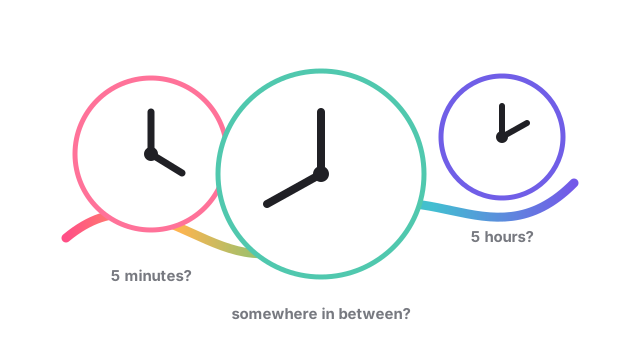
“Time blindness” is an informal phrase rather than a diagnosis, but difficulties with time perception and time management are well documented in ADHD. Someone may understand clocks perfectly while struggling to feel duration consistently or use that information at the right moment.
Hyperfocus, distraction and transitions can all distort the experience. This may look like losing hours in an absorbing activity, repeatedly underestimating a journey, or noticing a deadline only when it becomes urgent enough to feel real.
More Than Being Late
The effects can include rushed mornings, missed meals, overfull days, late fees, unfinished tasks and friction with people who interpret poor timing as indifference. It is not a universal ADHD experience and it does not excuse the impact on others—but understanding the mechanism makes practical support easier.
Externalise Time
- Use a visual countdown or timer that shows time shrinking.
- Measure routine tasks once; planning from evidence beats planning from feeling.
- Add explicit preparation and travel time to calendar events.
- Set staged alarms: begin wrapping up, stop, then leave.
- Put clocks where activities happen, not only on a phone that invites distraction.
- Create an external stopping cue for hyperfocus, ideally involving another person when the stakes are high.